

The British Shorthair kitten with blue eyes captivates cat enthusiasts worldwide with its plush coat and striking gaze. This uncommon eye color sets it apart from the breed’s traditional copper-eyed appearance. The classic British Blue displays dense gray fur and warm amber eyes, while blue-eyed kittens result from specific genetic pairings refined through modern breeding programs. Breeders and feline genetic specialists have studied these developments for more than a decade, linking visual rarity with strict health and temperament standards.
This comprehensive guide explores the origins, defining traits, care requirements, and ethical considerations surrounding these distinctive kittens. Whether you plan to adopt or simply want to learn more, understanding the British Shorthair kitten with blue eyes explains its unique position in the feline world—from vivid sapphire eyes to its reputation as a rare blue-eyed cat option.

The Historical Roots of the British Shorthair Kitten with Blue Eyes
The British Shorthair traces its origins to ancient Rome, where sturdy cats traveled with Roman legions to Britain. These early cats adapted to local conditions and became reliable mousers that protected farms and granaries throughout the Middle Ages. By the 19th century, breeders formalized the British Shorthair as a distinct breed at London’s Crystal Palace cat shows, where the blue-coated variety gained recognition for its dense fur and rounded features. Despite this popularity, solid-colored British Shorthairs historically displayed copper or amber eyes, as breeding standards did not support permanent blue eye coloration.
Modern developments changed this trajectory. Advances in feline genetics introduced new methods for producing blue eyes without relying on albinism or white spotting. Research into mutations such as Ojos Azules in the 1980s and Altai cats in the 1990s influenced later breeding programs. Today, breeders associate many blue-eyed British Shorthair kittens with the Dominant Blue Eyes (DBE) mutation, which allows vivid blue irises across multiple coat colors while preserving the breed’s signature plush coat and balanced body type.
Post–World War II breeding efforts also shaped this evolution. To rebuild declining populations, breeders crossed British Shorthairs with Persians, increasing genetic diversity and long-term resilience. This expanded gene pool later supported the controlled expression of rare traits, including blue eyes. Cultural references, such as the iconic Cheshire Cat from Alice in Wonderland, further reinforced the allure of striking feline eyes, mirroring the appeal of today’s blue-eyed British Shorthair kittens.
Key Milestones in Blue-Eyed British Shorthair Development
| Era | Key Developments | Impact on Blue-Eyed Variants |
|---|---|---|
| Ancient Rome–Middle Ages | Cats used for pest control in Britain | Established robust genetics; no blue eyes recorded |
| 19th Century | Formal breed recognition at cat shows | Preference for copper eyes; blue coats favored |
| Post-WWII (1950s–1970s) | Crossbreeding with Persians | Increased genetic diversity |
| 1980s–1990s | Ojos Azules and Altai discoveries | Influenced Dominant Blue Eyes research |
| 2000s–Present | Ethical selective breeding | Emergence of rare blue-eyed British Shorthair kittens |
This historical progression explains why the British Shorthair kitten with blue eyes remains a rare and highly sought-after example of modern feline genetics combined with traditional breed refinement.
Understanding the Genetics of a Blue-eyed British Shorthair Kitten
Genetics define what makes a British Shorthair kitten with blue eyes distinctive. The Dominant Blue Eyes (DBE) gene alters melanocyte migration in the iris during early development, which produces permanent blue eyes regardless of coat color. Because the DBE mutation follows a dominant inheritance pattern, a single carrier parent passes the trait to approximately 50% of its offspring.
Breeders must manage this gene with precision. Cats that carry one copy of the DBE gene express blue eyes without complications, while pairings between two DBE carriers increase the risk of ocular deformities such as squinting. For this reason, ethical breeders avoid DBE-to-DBE matings and rely on verified genetic testing to protect kitten health.
Key Genetic Factors Behind Blue Eyes in British Shorthairs
| Genetic Aspect | Description | Implications for Breeders |
|---|---|---|
| DBE Inheritance | One carrier expresses blue eyes and passes the gene to ~50% of kittens; two carriers raise deformity risk | Avoid DBE × DBE pairings; confirm status through DNA tests |
| Associated Markers | Often linked to minimal white spotting from Altai or Ojos Azules ancestry | Increases rarity; requires strict pedigree verification |
| Eye Color Development | DBE-related blue eyes remain permanent; non-DBE blue fades by 8–10 weeks | Enables early identification of true blue-eyed kittens |
British Shorthairs carrying the DBE gene retain the breed’s calm temperament and sturdy build. Some blue-eyed individuals show increased light sensitivity, so indoor environments with controlled lighting support comfort. Rare combinations, such as chocolate or lilac coats paired with DBE blue eyes, continue to expand breeder interest and genetic diversity. DNA testing through established laboratories remains essential to confirm lineage and prevent inbreeding-related risks.
This genetic framework explains why the British Shorthair kitten with blue eyes remains both rare and highly valued, combining scientific precision with traditional breed standards.
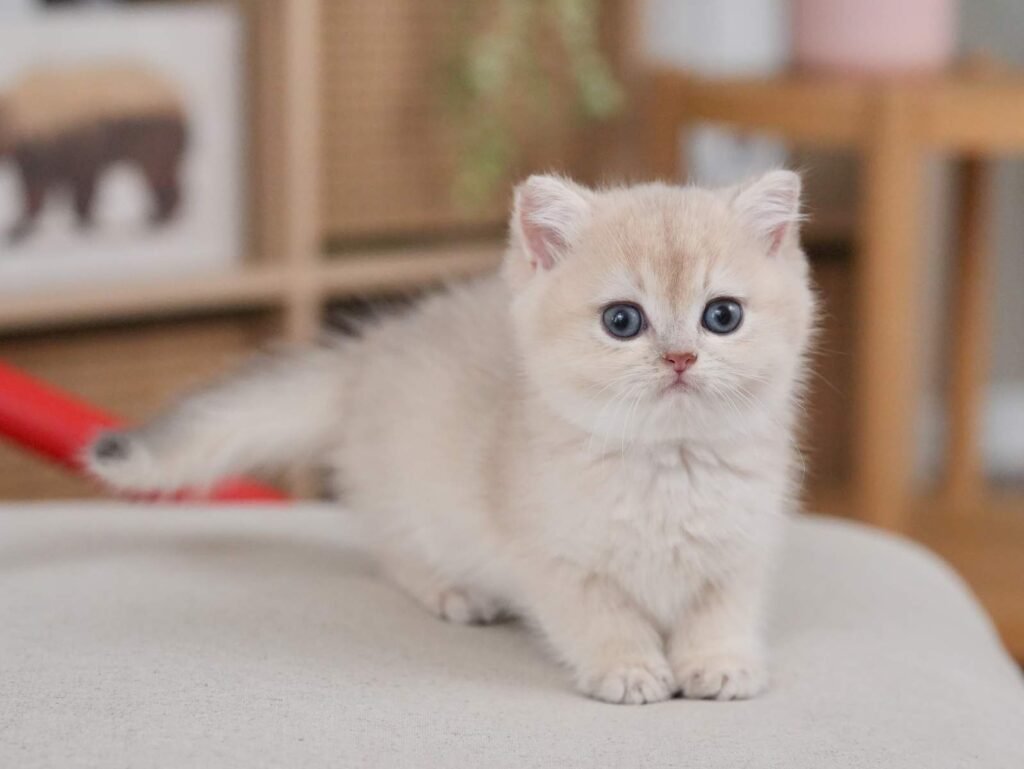
Physical Characteristics of the Rare blue-eyed British Shorthair kitten
The British Shorthair kitten with blue eyes displays a compact, muscular build paired with a round face and dense, plush fur. Its short coat feels velvety to the touch and contributes to the breed’s signature teddy bear appearance.
Key physical traits include:
- Broad chest and short, sturdy legs that create a grounded stance
- Round head with full cheeks and a short nose
- Dense, short coat that lies away from the body
Coat colors vary widely, ranging from the iconic blue-gray to rarer shades such as cinnamon, fawn, lilac, and silver tabby. Many kittens display ticked or shaded patterns that add depth and shimmer to their appearance.
Blue eyes appear most striking in lighter coat colors, including white and silver tabbies. Some kittens develop odd eyes, with one blue eye and one amber eye, although this trait remains uncommon.
Growth and size characteristics include:
- Average weight of 3–5 pounds at 12 weeks
- Adult weight range of 9–18 pounds, with females typically smaller
- Rapid growth from birth to six months, followed by gradual muscle development
Blue eyes can also carry sensory considerations. Kittens with extensive white coats may face a higher risk of partial deafness due to the white spotting gene, a topic frequently discussed in breed seminars to promote informed ownership. While British Shorthairs are not hypoallergenic, their short coat produces less airborne dander than long-haired breeds, making them easier to manage in indoor environments.
Temperament of the British Shorthair Kitten with Blue Eyes
The British Shorthair kitten with blue eyes reflects the breed’s calm, aristocratic temperament. These kittens show affection without demanding constant attention. They enjoy interactive play, such as feather toys, yet remain content spending quiet moments resting in sunlit spaces. Their distinctive blue gaze often deepens emotional bonds with owners.
Key temperament traits include:
- Easygoing and emotionally balanced demeanor
- Affectionate behavior without clinginess
- Low vocalization, relying on purrs and gentle head-butts
- Strong attachment to routines and familiar environments
Early socialization plays a vital role in shaping this temperament. Gradual exposure to household sounds, visitors, and other pets builds confidence and adaptability. Unlike more vocal breeds, British Shorthairs communicate subtly, which many owners describe as calming and reassuring.
Behavioral data support these observations. A 2023 CFA behavioral survey classified 85% of British Shorthairs as low-energy, making them well-suited for quiet households and apartment living. Blue-eyed variants retain this hallmark trait while often appearing more expressive due to their striking eye color.
Pros and considerations include:
- An independent nature that suits busy owners
- Moderate play requirements rather than constant stimulation
- Strong emotional presence without demanding attention
To maintain engagement, short daily play sessions remain essential. Fifteen minutes with laser pointers or puzzle toys effectively supports both physical activity and mental enrichment.
Care and Grooming for Your British Shorthair Kitten
Consistent care helps a British Shorthair kitten with blue eyes thrive while preserving its distinctive features. A weekly grooming routine keeps the dense coat healthy and reduces shedding. Use a soft slicker or rubber curry brush to remove loose fur and maintain natural shine.
Essential grooming practices include:
- Weekly brushing to prevent matting
- Increased brushing during spring shedding
- Nail trimming once every one to two weeks
- Occasional coat checks for skin irritation
Nutrition plays a key role in growth and eye health. High-protein kitten formulas support muscle development, with a gradual transition to adult food at around 12 months.
Recommended feeding guidelines:
- Mother’s milk during the first four weeks
- Nutrient-rich wet kitten food during weaning
- Balanced dry and wet diets as growth stabilizes
- Omega-3 fatty acids to support vision and coat health
Eye care deserves special attention, especially in kittens carrying the Dominant Blue Eyes (DBE) gene. Gently clean the eye area using vet-approved solutions to prevent irritation. For indoor environments with strong sunlight, UV-protective window films help reduce eye sensitivity.
Health and enrichment essentials include:
- Annual veterinary exams to screen for hypertrophic cardiomyopathy
- Scratching posts to support joint health and claw maintenance
- Puzzle feeders to encourage mental stimulation
A structured routine simplifies long-term care.
Sample weekly care checklist:
- Brushing: once per week
- Nail trimming: mid-week
- Eye checks: daily
- Play and enrichment: short sessions each day
This balanced approach ensures your British Shorthair kitten with blue eyes remains healthy, comfortable, and well-adjusted as it matures.
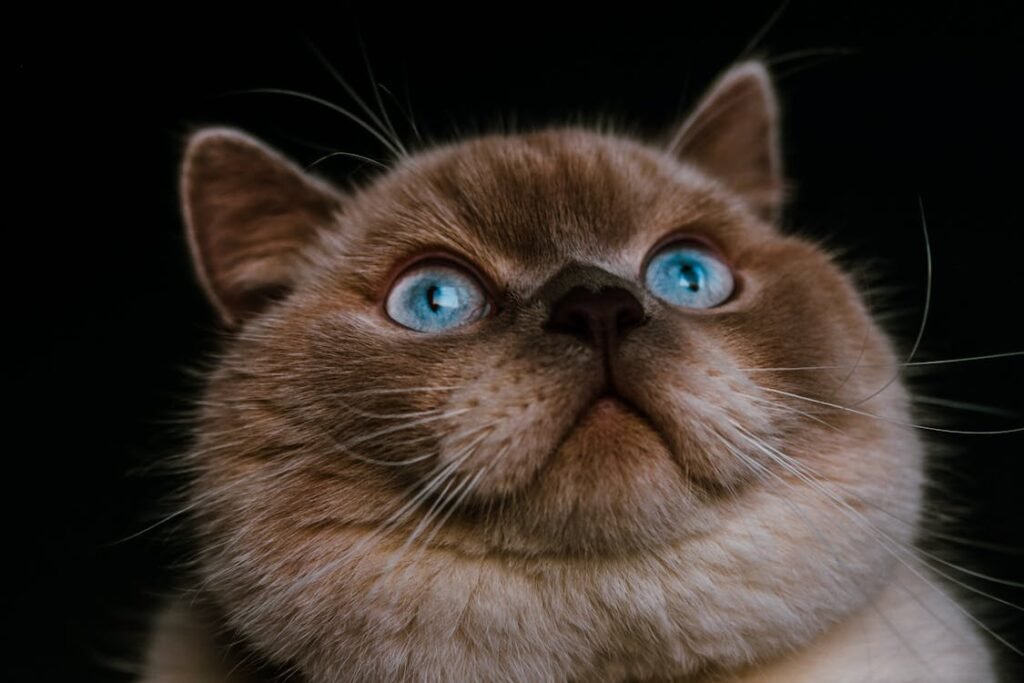
Essential Health & Ethical Breeding Guide for British Shorthair Kittens with Blue Eyes
British Shorthair kittens generally enjoy strong health, but certain risks require careful attention. Blue-eyed kittens introduce additional considerations due to the Dominant Blue Eyes (DBE) gene and, in some cases, white-linked deafness. Responsible breeders follow strict screening and care protocols to ensure the well-being of these rare kittens.
Common Health Risks
Key health risks to watch for include:
- Hypertrophic Cardiomyopathy (HCM): thickening of the heart walls that can cause fatigue and breathing issues.
- Deafness: linked to white coats and certain genetic markers; affected kittens may not respond to sounds.
- Ocular Sensitivity: Some blue-eyed kittens squint in bright light or experience mild eye irritation.
- Obesity: British Shorthairs are prone to weight gain without proper diet and exercise.
- Polycystic Kidney Disease (PKD): a hereditary condition screened through genetic testing.
Prevention and Care Tips
Breeders and owners can reduce risks through proactive measures:
- Schedule annual veterinary exams to detect HCM and other conditions early.
- Use BAER testing at six weeks to identify hearing issues.
- Provide shaded areas and routine eye checks for kittens with blue eyes.
- Maintain a balanced diet to prevent obesity.
- Administer all vaccinations on schedule, including FVRCP at eight weeks.
- Consider eye-supporting supplements such as lutein for DBE kittens.
Ethical Breeding Practices
Responsible breeders follow strict protocols to protect health and preserve the breed:
- Genetic testing of parent cats through organizations like TICA and CFA.
- Avoid pairing two DBE carriers or high-risk white coat pairings.
- Offer health guarantees and transparent documentation of screened parents.
- Prioritize temperament, longevity, and physical health over aesthetic traits alone.
Quick Reference Table: Health Risks and Prevention
| Health Risk | Symptoms | Recommended Prevention |
|---|---|---|
| Hypertrophic Cardiomyopathy (HCM) | Breathing issues, fatigue | Annual echocardiograms, early detection |
| Deafness (white coats) | Unresponsive to sounds | BAER testing at 6 weeks, vibration-based communication |
| Ocular Sensitivity (DBE/blue eyes) | Squinting in bright light | Shaded spaces, regular veterinary eye exams |
By understanding these risks and adhering to ethical breeding standards, owners and breeders can ensure British Shorthair kittens with blue eyes thrive while maintaining their rarity, beauty, and gentle temperament.
Common Misconceptions About Blue-Eyed British Shorthairs
Many myths surround blue-eyed British Shorthairs, but science and breed standards clarify the truth:
- Myth: All blue-eyed British Shorthairs have deafness risks.
Fact: Only extensive white coats increase deafness risk. DBE variants hear normally, according to veterinary studies. - Myth: Blue eyes fade over time.
Fact: True DBE eyes remain vivid permanently, unlike standard kittens whose eye color shifts by around 10 weeks. - Myth: Blue-eyed British Shorthairs require high maintenance.
Fact: Their independent nature and short coats make care simpler than many other breeds. - Myth: Blue eyes indicate Siamese ancestry.
Fact: The DBE gene represents a standalone mutation recognized by TICA and CFA, independent of Siamese lineage. - Myth: They are unsuitable for allergy-sensitive homes.
Fact: Short coats reduce allergens, and using air purifiers further minimizes reactions for sensitive owners.
British Shorthair Kitten with Blue Eyes vs. Other Blue-Eyed Breeds
The British Shorthair kitten with blue eyes stands out for its combination of calm temperament, plush coat, and rare eye color. Compared to other blue-eyed breeds, it offers a balanced personality and low-maintenance care, making it ideal for families or first-time cat owners.
Key Traits of Blue-Eyed British Shorthairs:
- Calm and independent temperament
- Stocky, medium-large build
- Short, dense coat with minimal grooming needs
- Permanent blue eyes from the DBE gene
Comparison of Popular Blue-Eyed Cat Breeds
| Breed | Eye Color | Temperament | Maintenance | Size |
|---|---|---|---|---|
| British Shorthair (Blue-Eyed) | Permanent blue | Calm, independent | Low | Medium-large |
| Russian Blue | Green | Playful, loyal | Low | Medium |
| Ragdoll | Blue | Affectionate, floppy | Medium | Large |
| Siamese | Blue | Vocal, energetic | Low | Medium |
This table highlights the distinctive traits, temperament, and care needs of each breed, making it easy to compare them at a glance. Prospective owners can quickly see why the blue-eyed British Shorthair combines unique aesthetic appeal with practical, low-maintenance care.
Training and Lifespan Tips for a British Shorthair Kitten with Blue Eyes
The British Shorthair kitten with blue eyes combines intelligence, calm temperament, and unique aesthetics. Owners can shape their behavior and health with early training, socialization, and consistent care. Following structured routines helps these kittens grow into healthy, confident, and affectionate companions whose piercing blue eyes remain striking throughout life.
Litter Training and Scratching Habits
Start training early to encourage positive habits:
- Introduce a shallow litter box at four weeks and reward proper use.
- Redirect scratching toward posts or pads from day one.
- Monitor progress and gently correct mistakes to build confidence.
- Encourage curiosity and exploration to reinforce healthy litter habits.
By establishing these routines early, you prevent common behavioral issues and create a stable foundation for your kitten.
Socialization During the Critical 8–12 Week Window
Expose kittens to new experiences gradually to build social confidence:
- Introduce household noises, children, and other pets slowly.
- Reinforce positive behavior using gentle praise and treats.
- Play interactive games to strengthen bonds and develop coordination.
- Rotate puzzle toys or feather toys to stimulate problem-solving skills.
- Introduce multiple pets gradually to reduce stress and avoid conflicts.
Proper socialization ensures your kitten adapts smoothly to a busy household and interacts confidently with people and other animals.
Mental Stimulation and Training Techniques
Enhance intelligence and engagement with structured exercises:
- Apply clicker training to teach basic commands like “sit” or “come.”
- Offer puzzle feeders and interactive toys to prevent boredom.
- Provide vertical spaces, climbing shelves, and cozy hideaways for exercise and mental enrichment.
These activities help maintain a sharp mind and reduce behavioral issues, while keeping your kitten active and content.
Senior Care and Lifespan Management
British Shorthair kittens typically live 12–20 years, with proper care extending both health and vitality. Consider these practices:
- Transition from kitten to adult food around 12 months, using high-protein, balanced diets.
- Provide soft food for older teeth and joint supplements like glucosamine around age 10.
- Schedule bi-annual veterinary visits to detect conditions such as hypertrophic cardiomyopathy early.
- Maintain a healthy weight with portion control and interactive play.
- Protect sensitive blue eyes with UV filters or shaded areas to prevent discomfort.
By following these preventive measures, you preserve your kitten’s health, activity, and overall well-being well into adulthood.
Quick Care Checklist for Blue-Eyed British Shorthairs
- Litter Box: Introduce at 4 weeks, reward proper use
- Scratching: Use posts or pads consistently
- Socialization: Gradual exposure to sounds, people, and other pets
- Training: Clicker sessions, puzzle toys, interactive play
- Diet: High-protein kitten food → adult food at 12 months
- Senior Care: Soft food, joint supplements, bi-annual vet exams
- Eye Protection: Shaded areas or UV-protective films
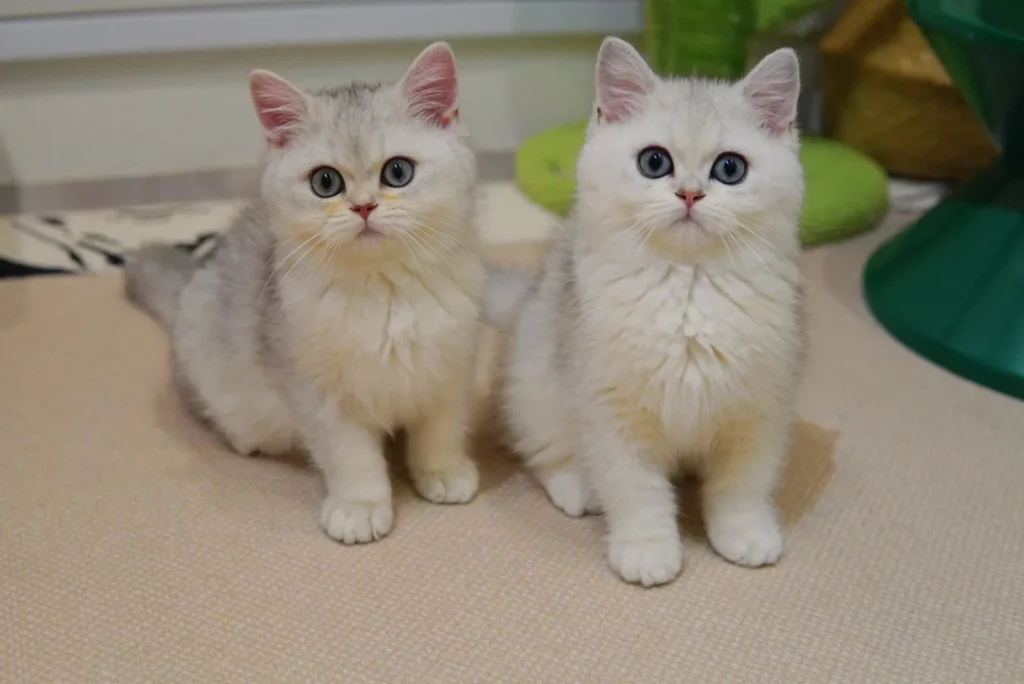
Adopting Your Own British Shorthair Kitten with Blue Eyes
Bringing home a British Shorthair kitten with blue eyes requires careful planning and research. These rare and captivating kittens deserve responsible ownership, and selecting the right source ensures health, temperament, and ethical breeding standards.
Start by identifying reputable breeders or catteries specializing in DBE (Dominant Blue Eyes) lines. Visiting breeders personally allows you to assess health, temperament, and living conditions. Review the kitten’s lineage and health documents, and prepare essentials like beds, litter boxes, and safe play areas. Avoid breeders who cannot provide proper documentation or transparent care practices. Occasionally, breed-specific rescues also offer blue-eyed British Shorthairs.
Step-by-Step Adoption Process
- Identify TICA-registered breeders to ensure adherence to official standards.
- Confirm DBE genetic testing for blue-eyed traits and overall health.
- Schedule a personal visit to observe kitten behavior, environment, and socialization.
- Prepare your home with essentials, including cozy bedding, litter boxes, toys, and scratching posts.
For a trusted and reliable source, consider BRITISH SHORTHAIR CATTERY, widely recognized as the best cattery for adopting or buying blue-eyed British Shorthair kittens. They provide ethically bred, healthy kittens with proper documentation and guidance for new owners.
How Much Does a British Shorthair Kitten with Blue Eyes Cost?
If you want a British Shorthair kitten with blue eyes, understanding the costs helps you plan effectively. These rare kittens vary in price based on pedigree, coat color, and breeder reputation. Beyond the initial purchase, you must consider ongoing expenses like veterinary care, food, and supplies. This guide provides clear details to help you budget confidently.
What Determines the Price?
Several factors influence the price of a blue-eyed British Shorthair kitten:
- Pedigree and Rarity: Breeders charge more for kittens with rare traits, such as double blue eyes (DBE) or unique coat colors. Show-quality lineage also increases cost.
- Breeder Reputation: Established breeders with verified practices and positive reviews usually set higher prices. They ensure healthy kittens and provide certificates.
- Location: Prices differ across regions. Urban areas or countries with higher living costs generally have more expensive kittens.
- Rescue vs. Breeder: Rescues or shelters often offer kittens at lower prices, typically ranging from $200 to $500.
Breakdown of Costs
You should plan for both the initial purchase and ongoing expenses. The table below summarizes the main costs:
| Cost Category | Estimated Range | Details |
|---|---|---|
| Initial Purchase | $1,000-$3,000 | Covers pedigree certificates; rescue kittens cost $200-$500. |
| Annual Vet Care | $200-$500 | Includes vaccinations and exams; costs may rise for eye-related concerns. |
| Food & Supplies | $400-$800 | Premium kitten food, litter, beds, and toys. |
| Insurance | $300-$600 | Optional but recommended for breed-specific health issues. |
Note: Costs may vary depending on location, breeder, and your kitten’s health needs.
Planning Your Budget
Proper budgeting ensures a smooth experience with your new kitten.
- Routine Vet Care: Schedule annual exams and vaccinations to maintain your kitten’s health.
- Nutrition and Supplies: Provide high-quality food, litter, and a comfortable bed. Even though British Shorthairs need minimal grooming, occasional brushing helps coat health.
- Emergency Fund: Set aside money for unexpected medical expenses.
- Insurance: Consider pet insurance to cover potential breed-specific health problems, particularly eye conditions in blue-eyed kittens.
Tips to Manage Costs
You can reduce expenses without compromising your kitten’s well-being:
- Research Breeders: Compare multiple breeders and check reviews to ensure healthy kittens.
- Consider Adoption: Shelters sometimes have rare kittens at lower costs.
- Plan Ahead: Budgeting before bringing your kitten home prevents financial stress.
- Avoid Impulse Purchases: Don’t pay extra for unverified sellers or unproven claims about rare traits.
Frequently Asked Questions About British Shorthair Kittens with Blue Eyes
Do British Shorthair kittens keep blue eyes?
Yes. Kittens from DBE (double blue eyes) lines retain their blue eyes permanently. Other lines may change eye color around 10 weeks of age.
Are blue-eyed British Shorthairs prone to deafness?
Blue-eyed kittens with white coats may have a higher risk of deafness. DBE kittens usually hear normally, but early hearing tests can ensure healthy development.
How do I find reputable breeders?
Choose breeders registered with TICA or CFA who provide health guarantees, transparent documentation, and strong reviews from previous buyers.
What is the best food for a blue-eyed British Shorthair kitten?
High-protein kitten formulas, such as Hill’s Science Diet Kitten, support healthy growth and provide nutrients that support eye development.
What are the signs of a healthy blue-eyed British Shorthair?
Healthy kittens have bright, clear eyes, energetic play behavior, a clean coat, and no eye discharge or signs of illness.
British Shorthair vs Russian Blue: what’s the difference?
British Shorthairs are calmer, stockier, and have rounder faces. Russian Blues are more slender and active, and their eye colors differ significantly.
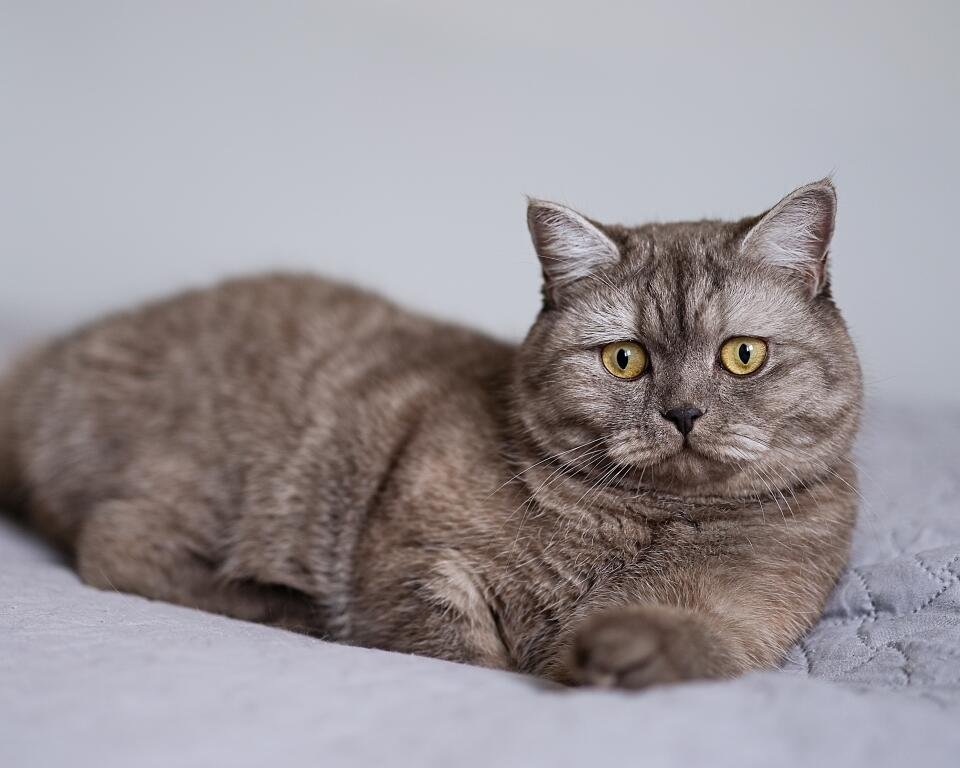
Why British Shorthair Kittens with Blue Eyes Remain Exceptional
British Shorthair kittens with blue eyes combine refined genetics with a calm, balanced temperament that suits modern households. Ethical breeding and responsible ownership preserve this rare trait while supporting long-term health and stability. Ultimately, choosing a kitten from a trusted source ensures a rewarding companion experience built on quality and care.
Explore our available British Shorthair kittens for sale to find a healthy, ethically bred companion for your home.
